

This dramatic epidemic has brought to light many issues for travelers, habits that were taken for granted or expedients that were not thought to be important.
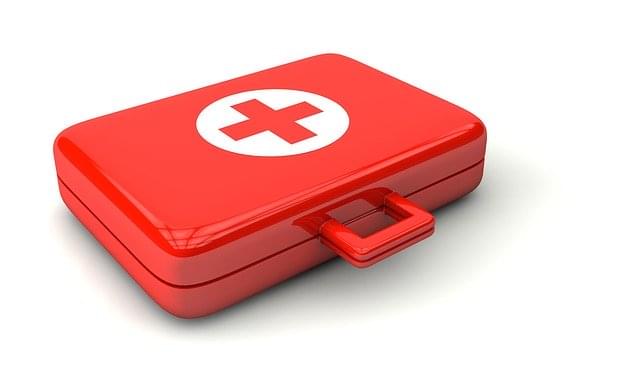
One of these is the "non-habit" of "building" a travel medical kit, both with supplies for minor unforeseen incidents, but especially with basic medications and/or drugs prescribed by one's primary care physician.
Very often people took it for granted that they could find a commonly used antibiotic in any pharmacy anywhere in the world, or they did not think they would have to carry supplies of their anti-hypertensive for two weeks for a trip of only seven days.
Now, with thousands of people stranded anywhere in the world, in resorts or hotel rooms unable to get out, it is easy to see that one must be prepared. Even the simple 5-day trip to Europe, can pose pitfalls.
Basic or over-the-counter medications
It is recommended to bring medications whose effect, efficacy and nonallergy is known. In some countries it is complicated to have the same medication you are used to, and it is not advisable to have to buy, for example, an antipyretic at 4 a.m. in a city you do not know.
Medications for chronic diseases
You need to bring a supply with a buffer of at least 30 days, and do not embark it in the hold. For some sensitive medications, it pays to have the original doctor's prescription with you at all times.
Prescription drugs
It pays to have broad-spectrum antibiotics prescribed by your doctor with you for common conditions, such as a dental abscess, bacterial pharyngitis, cystitis, bacterial diarrhea, etc.
One obviously needs to know when to take these drugs, but even then, for example, it will be easier after being seen by a doctor locally, with his or her prescription, to take the drug already known and without having to go and buy it in the foreign country.
Moreover, very often it is bacterial infections that one has already had and a therapy that one has already taken.
Of course, for any emergency/urgency, you have to immediately contact the local medical services.
Again, part of the medical kit is health insurance. But we will talk about this topic another time.
We only point out that it is recommended to have it for every trip, even for example to European countries. For although it is true that health care is guaranteed for the latter, this is through the public health care system. Relying on the solution of public assistance, it is great for real emergencies, but in situations that require a simple medical consultation, perhaps specialized, it is definitely better to be insured and rely on a private doctor recommended and selected by the insurance company and not on the emergency room, with all that can follow.